
Post
THC Dosage Starter Guide for New Users
Apr
One bad first dose can ruin a product that might have been perfect for you at the right amount. That is why a solid THC dosage starter guide matters. If you want a better shot at a smooth, controlled experience, the real goal is simple – start lower than you think you need, pay attention to the format, and give it enough time to work.
THC does not hit the same way across flower, vapes, edibles, oils, and concentrates. Two products can carry similar potency on paper and still feel completely different in the body. The amount you take matters, but so do your tolerance, metabolism, setting, and whether you ate recently.
Why a THC dosage starter guide is worth following
A lot of people make the same mistake right away. They assume stronger means better, or they compare their first dose to someone with a much higher tolerance. That usually leads to taking too much too fast.
A smarter approach gives you more control. Lower starter doses help you judge how your body responds without turning the session into guesswork. This is especially useful if you are ordering online and choosing from multiple product types with different strengths, effects, and onset times.
The good news is that most bad dosing experiences are avoidable. You do not need to chase the highest THC percentage. You need the right entry point.
Start with the format, not just the milligrams
When people ask how much THC they should take, the first real question is what kind of product they are using. A 5 mg edible is not the same as one pull from a vape, and neither compares neatly to a few hits of flower.
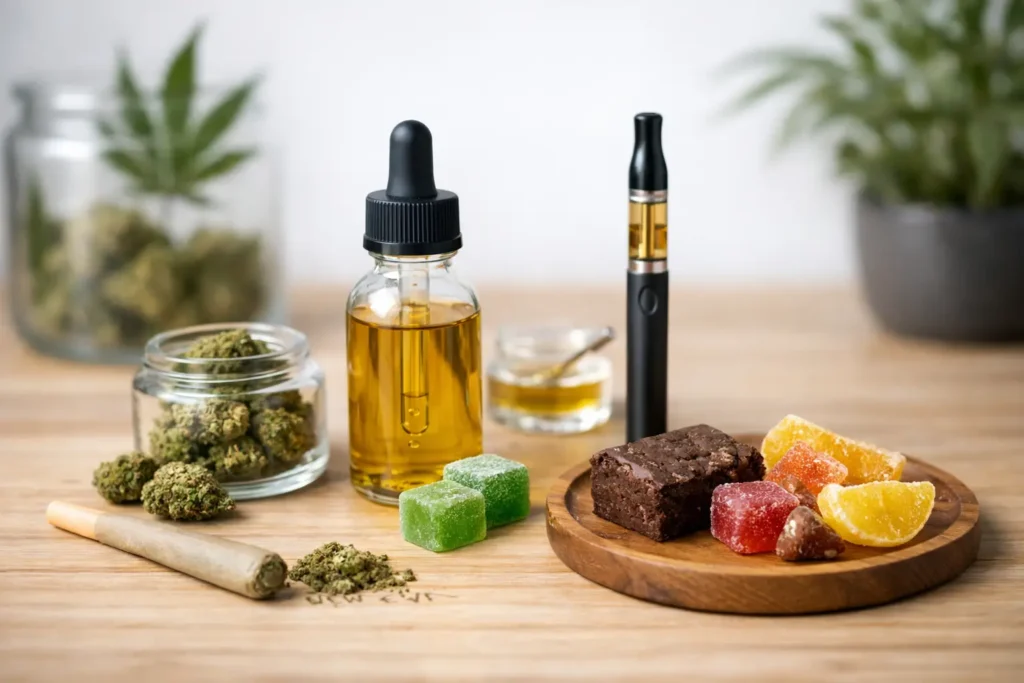
Flower and pre-rolls tend to come on faster, which makes them easier for beginners to control in real time. You can take one inhale, wait several minutes, and decide whether you need more. Vapes work similarly, although some cartridges and disposables can feel stronger than expected because the THC is more concentrated and the inhale is smoother.
Edibles are where beginners get into trouble. They take longer to kick in, often anywhere from 45 minutes to 2 hours, and people often assume nothing is happening. Then they take more, and the full effect hits all at once. If you are new, patience is part of the dose.
Oils and tinctures sit somewhere in the middle. If taken under the tongue, they may act faster than edibles, but they still deserve caution. Concentrates, dabs, and high-potency extracts are usually not where a true beginner should start. They are built for intensity, not gentle trial and error.
Starter THC dosage by product type
For edibles, 2.5 mg to 5 mg of THC is a practical beginner range. If you are highly cautious, sensitive to substances, or have not used cannabis before, start at 2.5 mg. If you have some prior exposure and feel comfortable, 5 mg may still be manageable. Waiting the full two hours before taking more is the rule that saves people from a rough night.
For tinctures, the same low-dose mindset applies. If the label gives milligrams per dropper, measure carefully and stay in the 2.5 mg to 5 mg range for your first test. Tinctures can feel cleaner and easier to portion, but they are only beginner-friendly if you actually measure them.
For flower, one small inhale is enough for a first try. Wait 10 to 15 minutes before deciding on another. Beginners do not need to finish a joint or pack a full bowl just because it is there. With inhaled THC, effects usually arrive fast enough that you can pace yourself.
For vape carts and disposables, take one short pull and stop there for at least 10 minutes. Vape products can be deceptively easy to overdo. The vapor is often smoother than smoke, so users may take larger hits without realizing how much THC they just inhaled.
For concentrates, moonrocks, and high-potency extracts, the honest answer is simple – these are better once you understand your tolerance. They are premium products, but premium does not mean beginner-safe at any amount.
What changes your ideal THC dose
Tolerance is the biggest factor. Someone who uses THC every weekend may need more than someone trying it for the first time, but product familiarity matters too. A person comfortable with flower may still need to go low with edibles.
Body size gets mentioned often, but it is not the whole story. Metabolism, recent food intake, sleep, stress, and your natural sensitivity to THC can matter just as much. That is why copy-paste dosage advice is unreliable.
The setting also matters. At home on a quiet night is different from taking THC before a crowded social event. If you are testing your response, choose a low-pressure environment where you do not need to be sharp, drive, or make plans. Convenience matters, but control matters more.
How to avoid taking too much
The safest beginner rule is low dose, full wait, then reassess. That sounds basic, but it works. Most overconsumption comes from stacking doses before the first one has fully developed.
If you are using an edible, do not redose at 30 or 45 minutes just because you feel only a slight effect. Some products rise slowly. Once they peak, they can feel much stronger than expected.
If you are smoking or vaping, avoid rapid back-to-back pulls. One inhale can be subtle at first and then build over several minutes. Give the experience room to arrive before deciding it is too weak.
Another smart move is choosing products with clear labeling and consistent dosing. That matters even more when you are shopping online. Reliable packaging, measured servings, and straightforward potency information make the process easier to control. That is one reason many buyers prefer trusted online dispensary options like BUDSHOP420 when they want privacy, variety, and a more predictable shopping experience.
What a good first experience usually feels like
At the right dose, most beginners describe mild relaxation, a lighter mood, altered sensory perception, and a manageable body buzz. You should still feel aware of what is happening. The experience may feel new, but it should not feel chaotic.
If you took too much, the signs usually show up as racing thoughts, anxiety, dizziness, dry mouth, nausea, or feeling far more sedated than intended. That can happen with any format, but it is especially common with edibles and strong vapes.
If that happens, the best move is to stop taking more THC, drink water, sit somewhere calm, and wait it out. The feeling will pass. Most people do not need to panic – they need time, a quieter setting, and less stimulation.
A better way to find your personal sweet spot
Think of your first few sessions as testing, not as a performance. You are not trying to prove anything. You are trying to learn the lowest amount that gives you the effect you actually want.
That goal changes depending on the product and the occasion. A light evening edible dose may be enough for relaxation. A social vape session may call for even less. A sleep-focused product might feel best at a different level than something used for daytime mood support.
This is where many beginners get smarter fast. They stop asking, how much can I handle, and start asking, how little do I need for the result I want? That shift usually leads to better experiences, better value, and fewer unpleasant surprises.
THC dosage starter guide mistakes to skip
The first mistake is matching someone else’s dose. Tolerance is personal. The second is changing formats and assuming the same number applies across all of them. It does not. The third is ignoring the clock, especially with edibles.
Another common mistake is buying only by potency. High THC percentages can sound impressive, but they are not always the right fit for a new user. A smoother first experience usually comes from better pacing, not a stronger label.
There is also a trade-off between speed and duration. Inhaled products tend to come on fast and wear off sooner, which makes them easier to adjust. Edibles take longer but can last much longer too. Neither is automatically better. It depends on how much control you want in the moment.
If you are just getting started, keep it simple. Choose one product type, use a low entry dose, and give yourself time to learn how it hits. A careful first session is not boring – it is the fastest route to finding what actually works for you.

Your writing style is very engaging.